Read Japanese Architecture: A Complete History
Japanese architecture is the longest continuous timber tradition on earth. For more than a thousand years, shrines, temples, castles, townhouses and farmhouses were built from the same kit of parts — posts and beams joined without nails, floors measured in tatami mats, walls that slide rather than stand — and repaired, rebuilt and renewed in the same materials, so that a building could be both ancient and new at once. This book follows that tradition from its beginnings through the sacred architecture of Shinto and Buddhism, the castles of the samurai age and the merchant streets of Kyoto, to the refinements of Katsura, the garden and the tea house, and then to the shock of the Western encounter in the Meiji period, the concrete experiments of Metabolism, and the contemporary masters — Ando, Kuma, SANAA and Shigeru Ban — who carry the timber idea into concrete, glass and paper. It is honest about the record: the dates of the oldest temples are debated, the most famous villa was partly invented by its modern admirers, the most famous capsule tower was demolished in 2022, and the question of what counts as authentic in a tradition built on rebuilding has no settled answer. The debates are flagged where they arise, because Japanese buildings reward the reader who looks at a joint, a threshold and a roof before reading a single label.
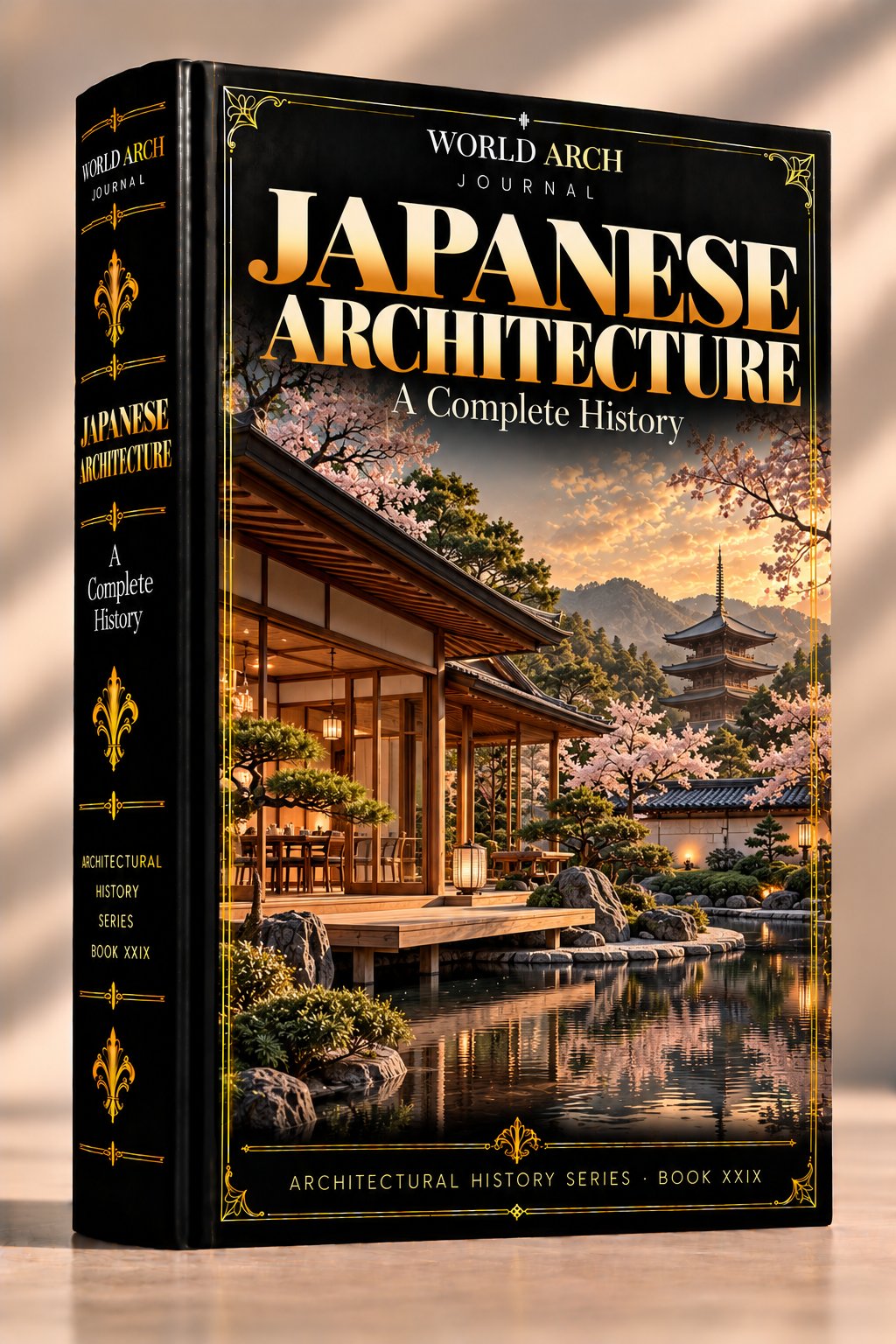
Read the complete book free on this page in the interactive page-flip reader (114 pages, no signup). The reader needs JavaScript; the same text is published as the web edition, and the print-quality PDF is available from the book page.