Read Persian Architecture: A Complete History
Persia built in every material its plateau offered — mud, baked brick, rubble stone, glazed tile — and in doing so invented or perfected a kit of forms that the whole Islamic world inherited: the iwan, the dome on squinches, the four-iwan mosque, muqarnas, the paradise garden. This book follows that architecture from its beginnings in Elamite Khuzestan, through the stone ceremony of Achaemenid Persepolis and the great vaults of Sasanian Iraq, to the Seljuk dome chambers of Isfahan, Uljaytu's mountain of a tomb at Soltaniyeh, Timur's Samarkand, and Shah Abbas's Isfahan, the most beautiful planned city of its century. It gives equal weight to the engineering that made Persian building possible in a dry land — the qanat that carries water underground for tens of kilometres, the windcatcher that cools a house without fuel, the ice house that keeps winter into August — because in Persia the beautiful and the useful were rarely separate arts. It closes by tracing the Persian gift eastward to Mughal India and westward into the common language of Islamic building, and by teaching the reader to recognise a Persian building in the field.
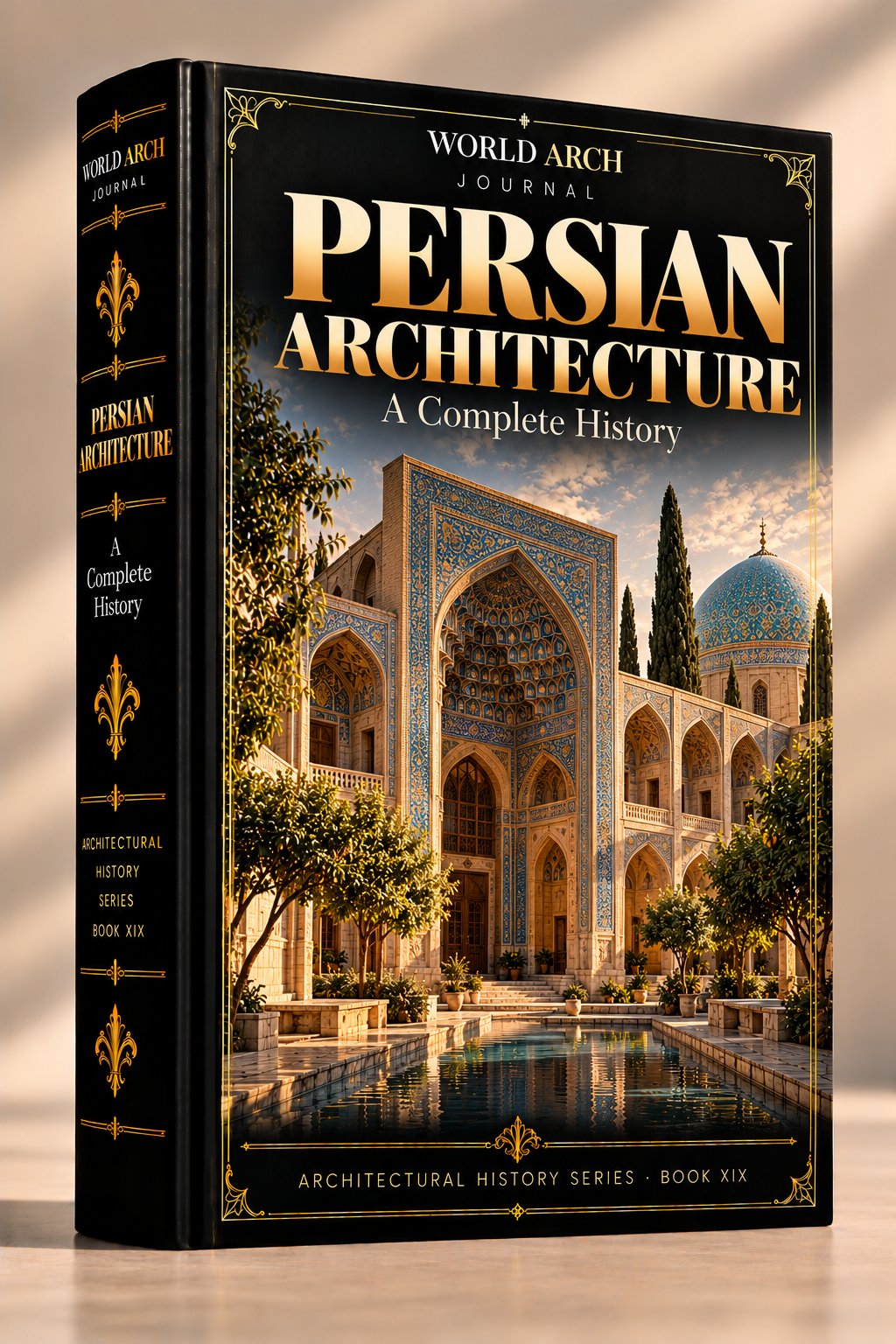
Read the complete book free on this page in the interactive page-flip reader (95 pages, no signup). The reader needs JavaScript; the same text is published as the web edition, and the print-quality PDF is available from the book page.