Read The Historic House: A Complete History
The house is the oldest building type and the one we read worst. Churches announce themselves; palaces explain themselves; but the house, which must receive guests without exposing private life, house servants without displaying them, and show status to a street it keeps at arm's length, hides its workings behind a composed face. This complete history opens the type up. It begins with the first true houses — the platformed rooms of Çatalhöyük, entered by ladder from the roof, and the stone-furnished houses of Skara Brae — and with the Roman domus, which arranged a whole society around an atrium open to the sky. It follows the medieval hall house, where one great room was the household, and the courtyard houses of China, the Islamic world and Spain, which turned the same diagram outward-in on three continents. It traces the planned house of the Renaissance and the Georgian age — Alberti's theory, Palladio's villas, Bess of Hardwick's glass prodigy, the Amsterdam canal house, the Bath terrace, the Parisian hôtel — and the serviced house of the nineteenth century, run by bells and back stairs, against which Morris, Voysey and Lutyens rebelled in the name of the hall and the hearth. It closes with the suburb and the modern open plan, the preservation movement that saved the historic house, and the five signs by which any example can be read from the street.
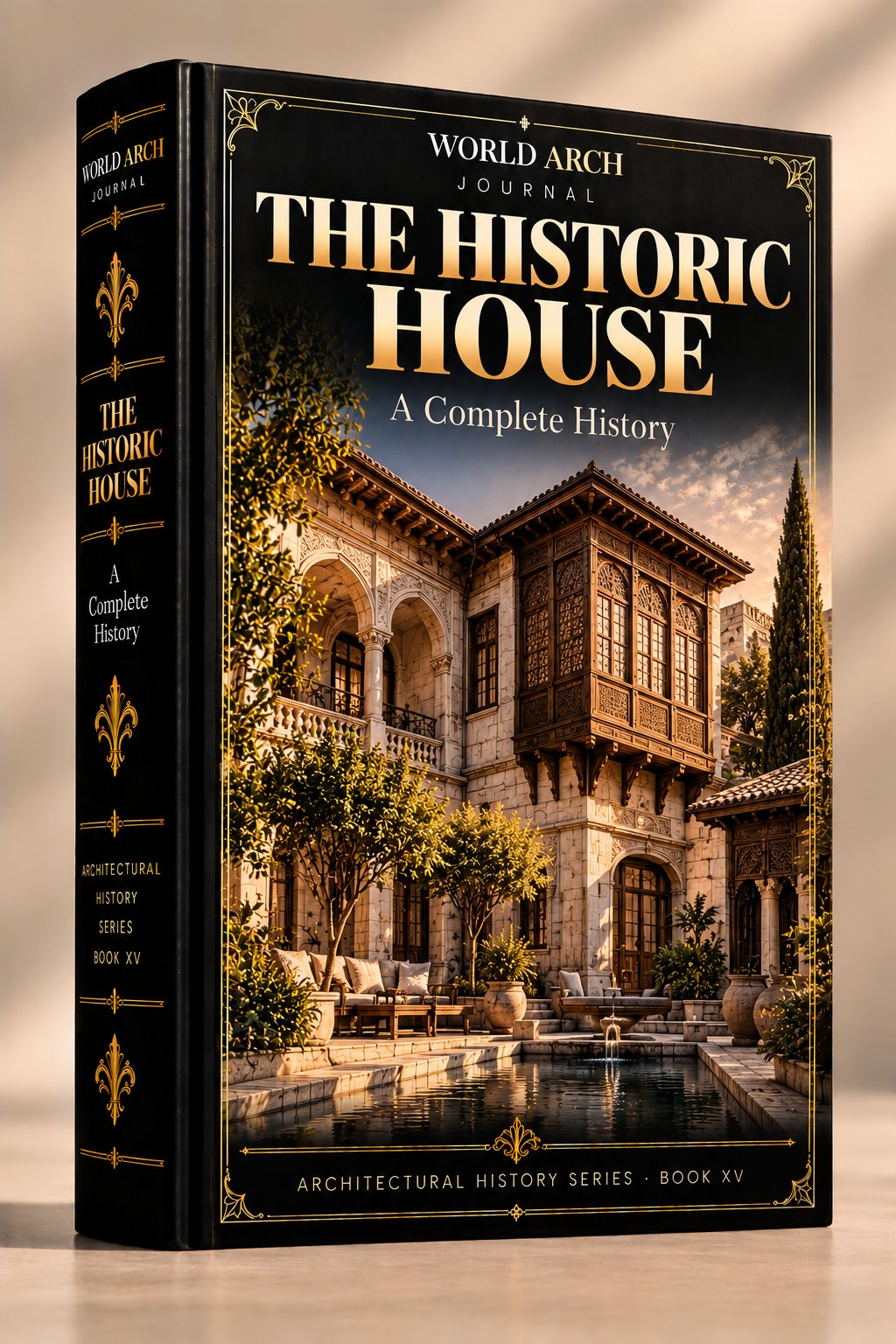
Read the complete book free on this page in the interactive page-flip reader (105 pages, no signup). The reader needs JavaScript; the same text is published as the web edition, and the print-quality PDF is available from the book page.