Read Ancient Rome: A Complete History
Rome’s gift to architecture was not a style but a system. The Greeks had given the Mediterranean the orders; Rome gave it concrete that could be poured into any shape, the arch and the vault that could span a crowd, the dome that could cover an empire’s meeting place, and the roads, aqueducts, sewers, harbours and law courts that made a city a repeatable idea rather than an accident of one site. This book follows that system from its beginnings among the Etruscan kings and the hard, pragmatic Republic, through the marble self-fashioning of Augustus and the concrete daring of Nero’s architects, to the great imperial syntheses — Trajan’s Forum, Hadrian’s Pantheon, the Baths of Caracalla — and the long late-antique transformation in which temples became churches and the basilica changed sides. It gives equal weight to the houses, apartment blocks, warehouses, tombs and provincial towns through which most Romans actually experienced architecture, because Rome’s achievement was ordinary as well as monumental: a building culture that could be taught, exported, repaired and inherited, and whose grammar the West has been relearning ever since. A final theme runs throughout: survival. What we call Roman architecture is what conversion, re-use and sheer mass allowed to reach us, and reading it well means reading the losses — the lime kilns, the robbed marble, the buried palaces — as carefully as the standing stones.
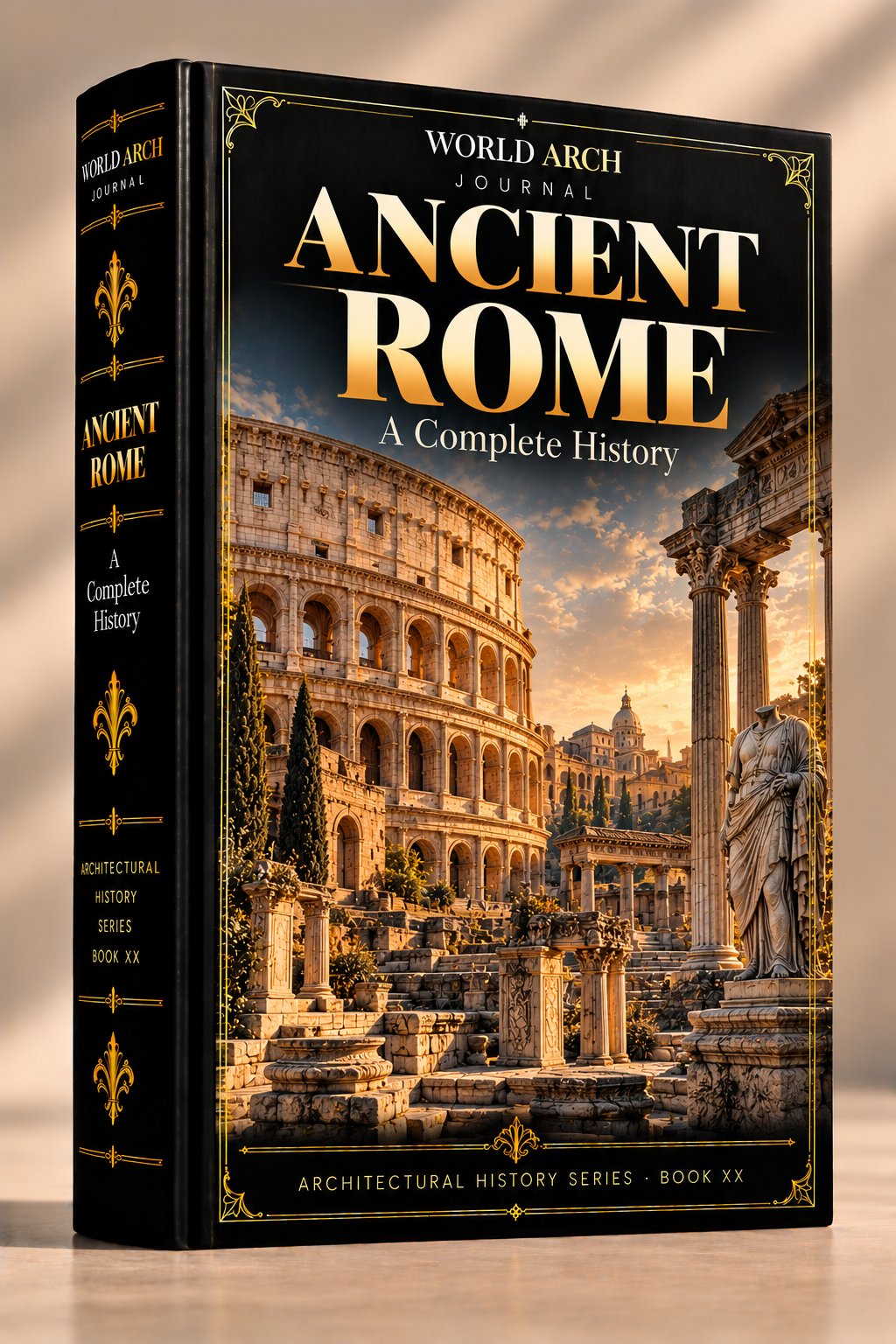
Read the complete book free on this page in the interactive page-flip reader (121 pages, no signup). The reader needs JavaScript; the same text is published as the web edition, and the print-quality PDF is available from the book page.