Read Indian Architecture: A Complete History
Indian architecture is not one tradition but a conversation between many: rock cut from the living cliff and stone raised course by course, the trabeated hall of post and beam and the arcuated dome and arch, the temple as a mountain of sculpture and the mosque as a garden of geometry, the fort as a city and the stepwell as a descent into water. For more than two thousand years, Buddhist, Jain, Hindu, Islamic and later colonial and modern builders worked side by side on the same subcontinent, borrowing each other's plans, craftsmen and ornament while keeping their own rituals, and the result is the richest architectural landscape on earth — where a single hillside at Ellora holds Buddhist, Hindu and Jain sanctuaries, where a Mughal tomb garden quotes a Persian paradise and a Hindu riverfront at once, and where temples consecrated a thousand years ago are still worshipped in daily. This book follows that conversation from the caves to the Capitol, from the stupa to the skyscraper, and it is honest about the record: the dating of Elephanta is disputed, the architect of the Taj Mahal is a matter of competing attributions, the Qutb Minar's builders are argued over, and the question of how much of a living temple is ancient and how much is renewal has no single answer. The debates are flagged where they arise, because Indian buildings reward the reader who looks at a tower, a hall, an arch, a carving and a courtyard before reading a single label.
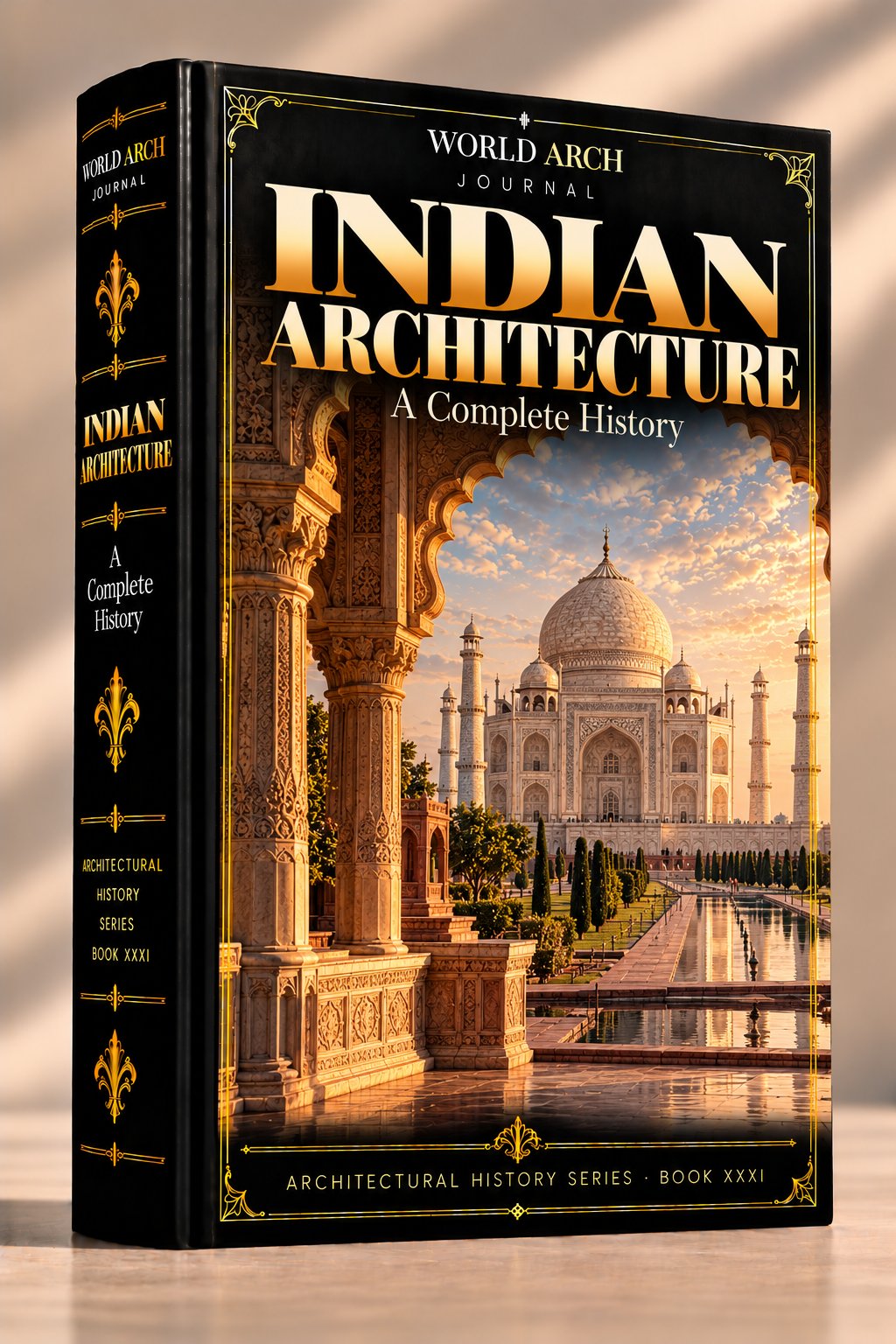
Read the complete book free on this page in the interactive page-flip reader (103 pages, no signup). The reader needs JavaScript; the same text is published as the web edition, and the print-quality PDF is available from the book page.