Read Islamic Architecture: A Complete History
Islamic architecture is the most geographically varied architecture in the world, because it is not a style but a programme. In the seventh century, a community in Medina needed a place to gather and pray, and the walled courtyard it built — shaded, communal, oriented toward Mecca — became the seed of a tradition that would spread, within a century, from Spain to Central Asia, and, over fourteen centuries, from West Africa to Southeast Asia and China. This book follows that programme through its great monuments: the Dome of the Rock in Jerusalem, the first Islamic monument and still one of the most debated; the Great Mosque of Damascus, the first imperial mosque; Samarra's spiral Malwiya; Kairouan and Córdoba, the hypostyle mosques of the west; the Alhambra, the palace that turned plaster into lace; Sinan's Süleymaniye and Selimiye, the dome made into a system; Safavid Isfahan, the city as a stage; and the Taj Mahal, the garden tomb carried to perfection. It is honest about evidence: the label 'Islamic' itself, the nuances of aniconism, the Dome of the Rock's original function, and the dating of many early buildings are all debated, and the debates are flagged where they arise, because Islamic buildings reward the reader who separates what the stone proves from what the imagination prefers.
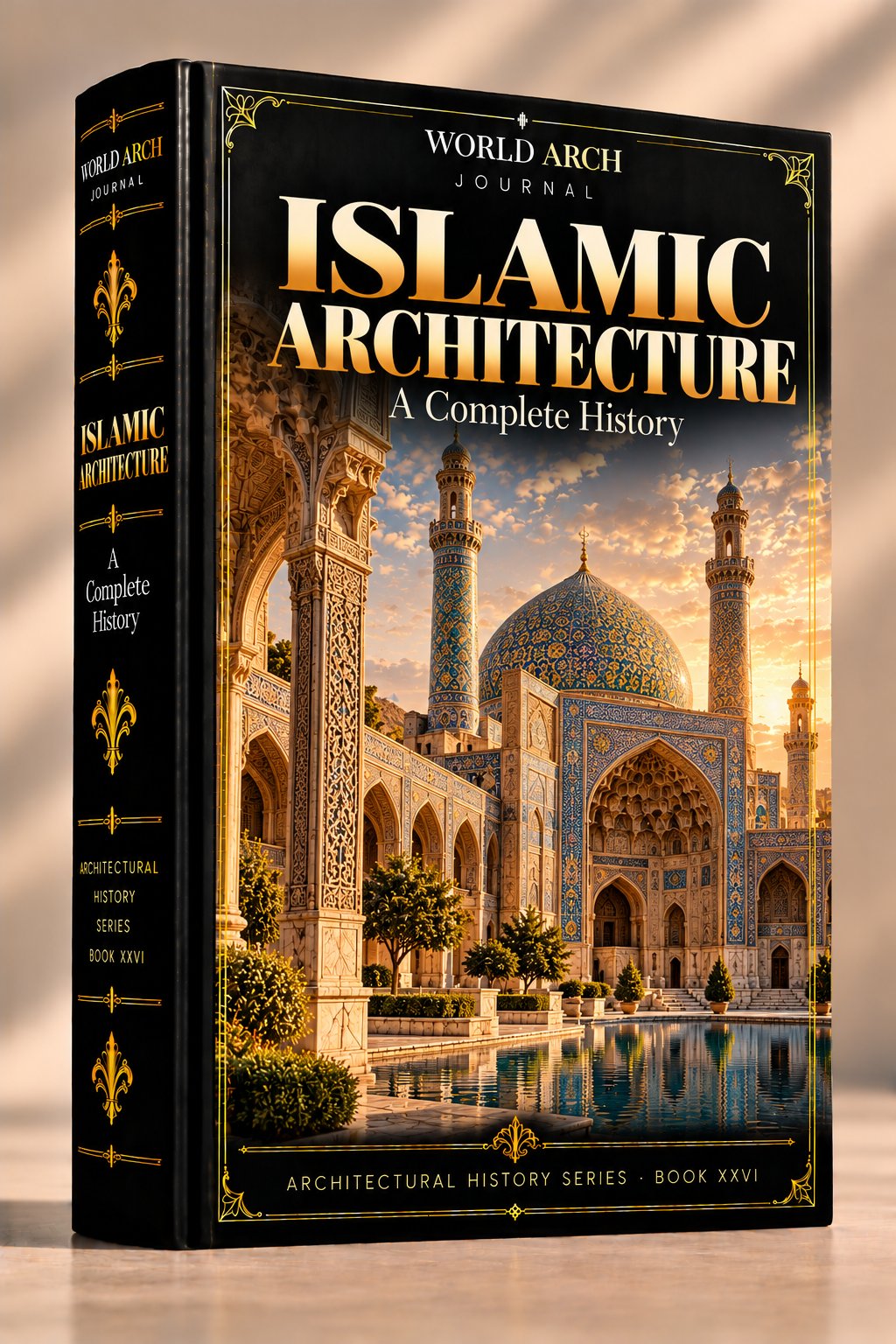
Read the complete book free on this page in the interactive page-flip reader (110 pages, no signup). The reader needs JavaScript; the same text is published as the web edition, and the print-quality PDF is available from the book page.