Read Light in Historic Buildings: A Complete History
Before electric light, daylight was the one material every builder had to design with and none could store. It had to be admitted through holes in structures that wanted to stay closed, coloured by glass that was dearer than the wall it replaced, and aimed with an accuracy that made a beam of sun into a calendar, a theology and a stage effect at once. This complete history follows architectural light from the aligned passage at Newgrange and the clerestories of Egyptian temples, through the Pantheon's oculus and Hagia Sophia's floating dome, to the Gothic dissolution of wall into stained glass at Saint-Denis, Sainte-Chapelle and Chartres. It continues through the measured light of the Renaissance, the staged light of the Baroque, the screened and domed light of the Islamic world, the Georgian sash and Soane's top-lit rooms, the iron-and-glass flood of the nineteenth century, and the modern masters — Le Corbusier, Kahn and Ando — who made daylight an argument again. It closes with the five signs by which light's design can be read in any standing building.
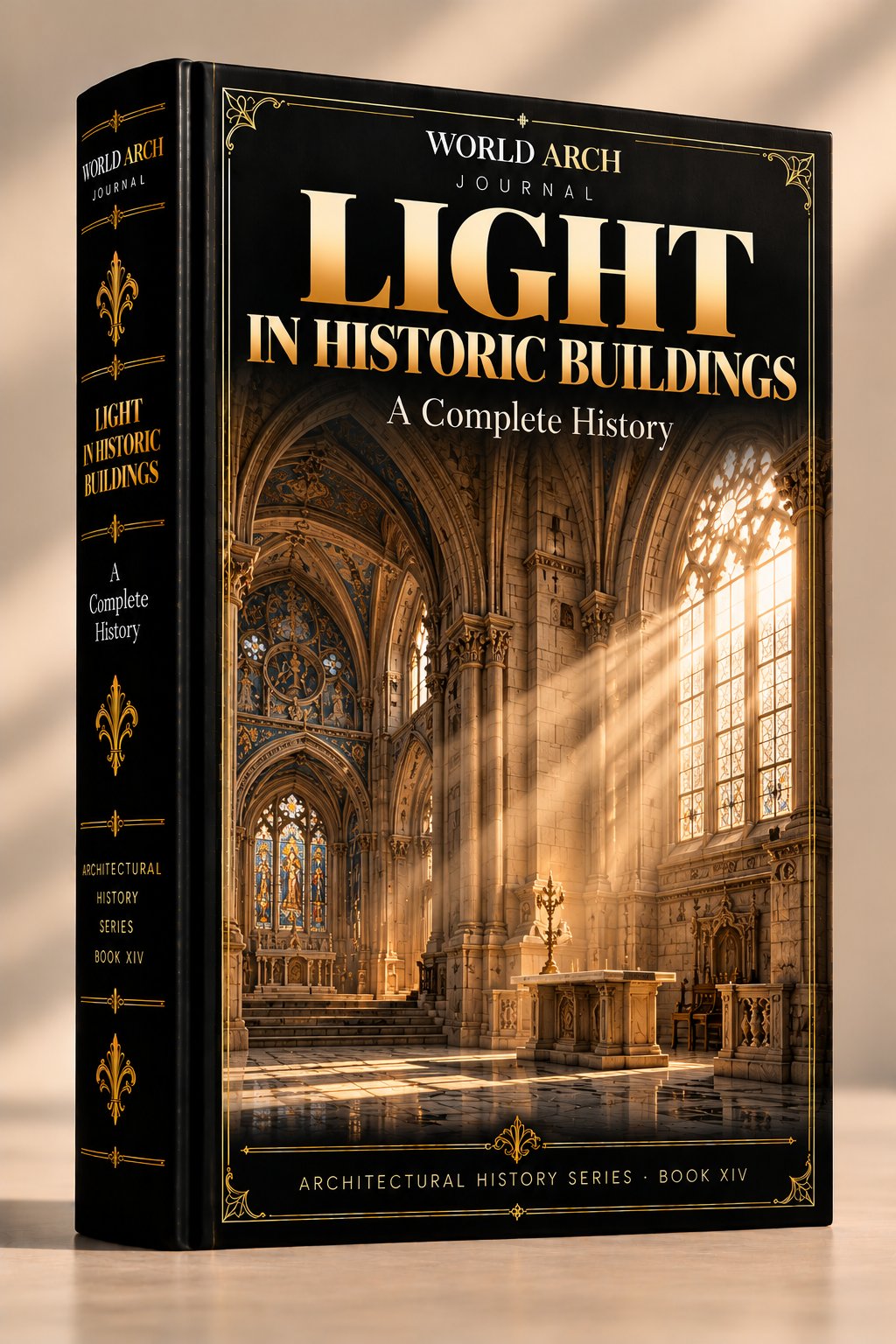
Read the complete book free on this page in the interactive page-flip reader (105 pages, no signup). The reader needs JavaScript; the same text is published as the web edition, and the print-quality PDF is available from the book page.