Read Postmodern Architecture: A Complete History
Postmodern architecture began as an argument before it became a style. By the early 1960s the modern movement, once a liberation, had hardened in many hands into a set of rules: flat roofs, strip windows, white walls, ornament as crime, and a faith that one universal language could serve every climate, client and city. Robert Venturi answered that a building could be both modern and historical, both plain and decorated, both serious and witty, and that the street, the sign and the familiar symbol were architectural materials quite as real as steel and glass. From that argument grew a generation of buildings that wear their references openly: a classical order applied like a poster, a pediment broken open at the crown, colour and tile laid on with civic confidence, quotations borrowed from Rome, from the High Street, from a child's drawing of a house, and the plain shed behind a decorated front. This book follows that generation from Philadelphia and Las Vegas to New York, New Orleans, Portland, Stuttgart, London, Modena, Poundbury, Tokyo and Mississauga, and it is honest about the record: the date of modernism's death is a polemic, not a fact; the authorship of several famous buildings is shared and disputed; and the line between quotation and pastiche, between irony and mere decoration, was argued over by the architects themselves. The debates are flagged where they arise, because postmodern buildings reward the reader who asks not only what a form looks like, but whom it is speaking to.
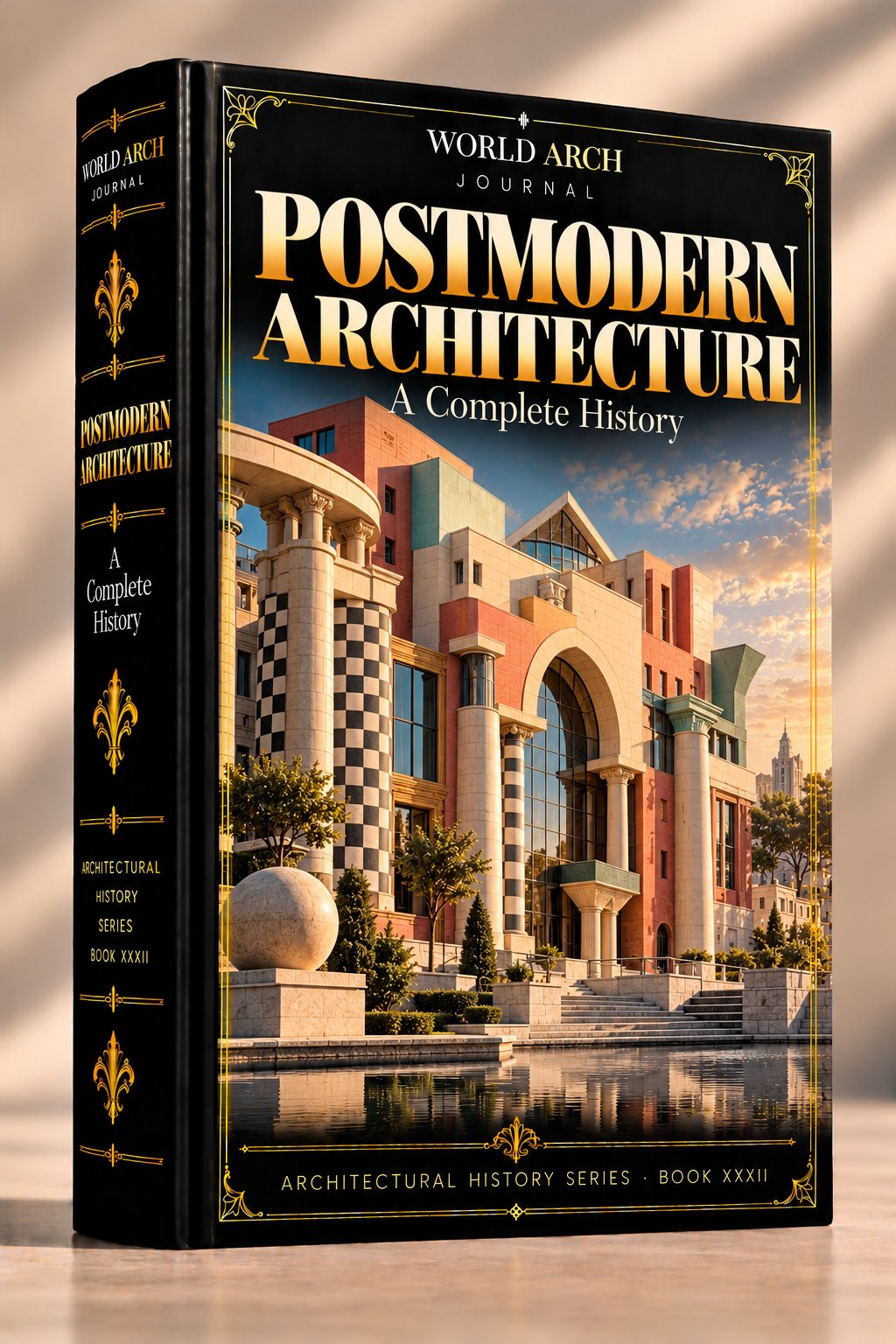
Read the complete book free on this page in the interactive page-flip reader (107 pages, no signup). The reader needs JavaScript; the same text is published as the web edition, and the print-quality PDF is available from the book page.