Read Renaissance Architecture: A Complete History
Renaissance architecture is the most consequential revival in the history of building, because it did not merely copy antiquity: it reasoned about it. In Florence, a republic of bankers and guilds decided to rebuild its cathedral, its churches and its palaces by the rules of Rome, measured and argued over; in Rome, the papacy gave those rules an empire's scale, crowning St Peter's with a dome that still defines the city's skyline; in Venice and the Veneto, Palladio turned the villa into a temple and wrote the book that taught the world to build in the classical language. This book follows that story from the competition for the baptistery doors in 1401 to the Palladianism of London and Virginia, through the dome's engineering, the orders' system, the palace and the villa, Mannerism's deliberate breaking of the rules, and the five signs by which any Renaissance building can be read in the street. It is honest about evidence: the dome's construction methods, the Pitti Palace's attribution, the Tempietto's date, the Rotonda's dome and the very idea of a Renaissance as a period are all debated, and the debates are flagged where they arise, because Renaissance buildings reward the reader who separates what the stone proves from what the imagination prefers.
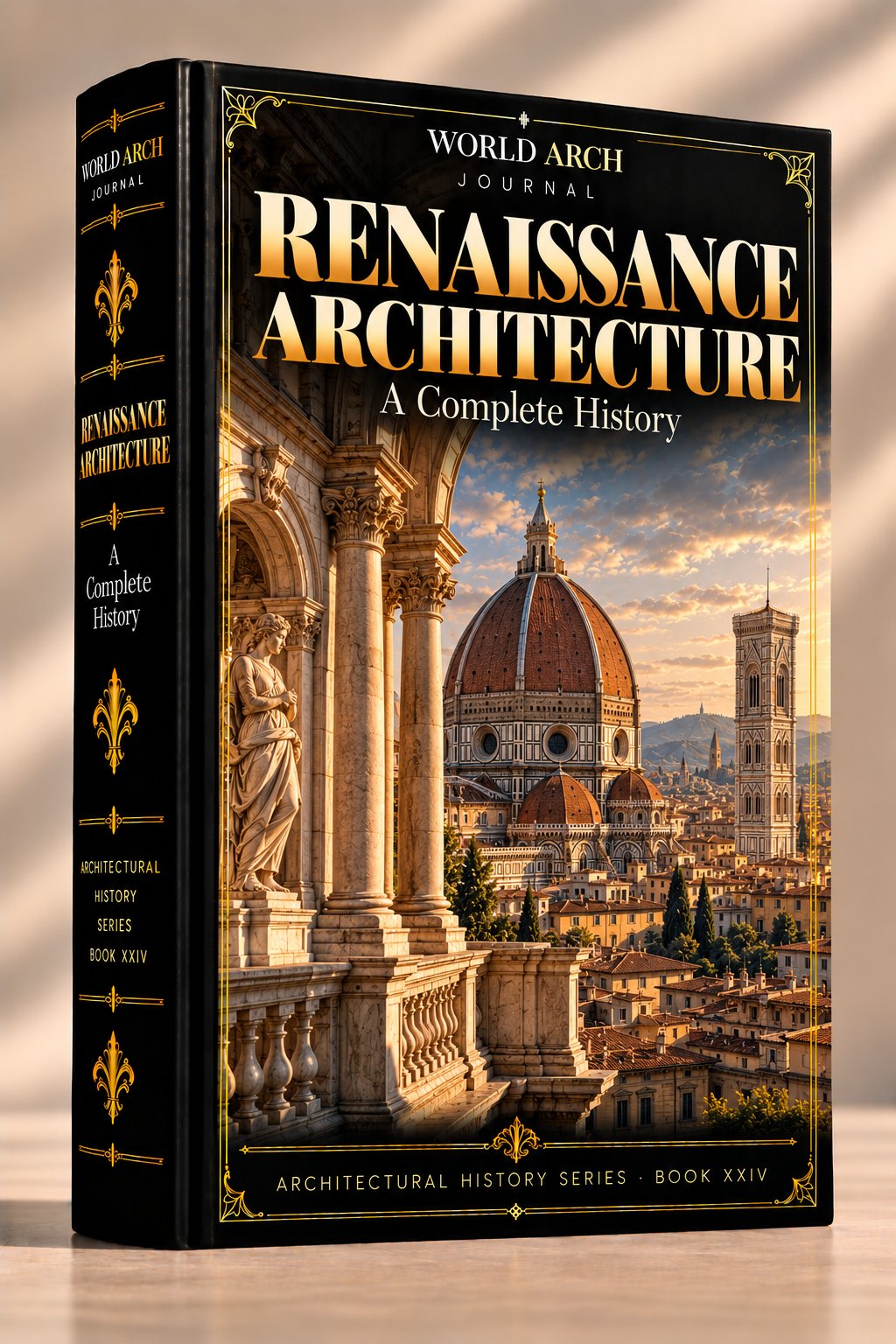
Read the complete book free on this page in the interactive page-flip reader (97 pages, no signup). The reader needs JavaScript; the same text is published as the web edition, and the print-quality PDF is available from the book page.