23 October: A Climate Summit’s Stage, an Island Under Threat, and Waste Turned to Brick
A summit’s stage, an island’s defenders, a museum built from city waste and a design week about accumulation — six stories on architecture’s material conscience.
By World Arch Journal · Published · Download PDF ↓

This edition selects six reports published on 21–22 October 2026 and checked on 23 October. Each story links directly to its original publication, and every photograph is an independently licensed image of the actual subject — never a news outlet’s own picture. “Our reading” is independent commentary, not on-site reporting. Estimated reading time: nine minutes.
Six stories: a summit’s stage, an island, waste brick, red mud, a rectory and Amman
This edition selects six reports published on 21–22 October 2026 and checked on 23 October. It pairs two commissions with environmental stakes — SP Architects’ adaptation of the former EXPO 2016 grounds for COP31 in Antalya and the contested Trump-linked resort on Albania’s Sazan Island — with two material stories — Design Museum Gent’s new wing in waste-based brick and Studio ThusThat’s ceramics from aluminium waste — plus Prest Vale Architects’ stone rectory extension in the Cotswolds and the lessons of Amman Design Week’s “Accumulations” edition. Each story links directly to its original publication, and every photograph is an independently licensed image of the actual subject — never a news outlet’s own picture. “Our reading” is independent commentary, not on-site reporting. Estimated reading time: nine minutes.
01 / SP Architects adapts Antalya’s former EXPO grounds for COP31
Source published:
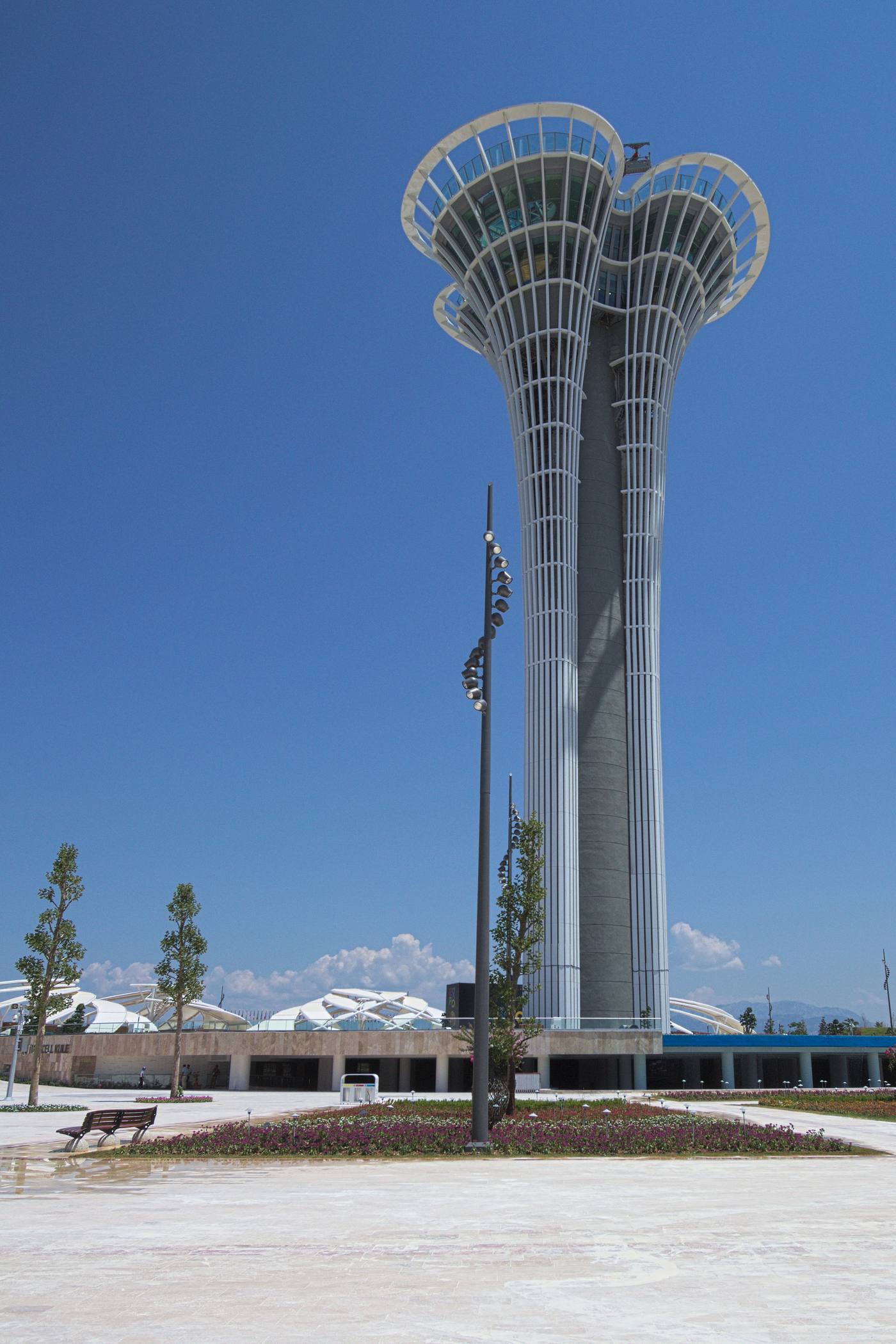

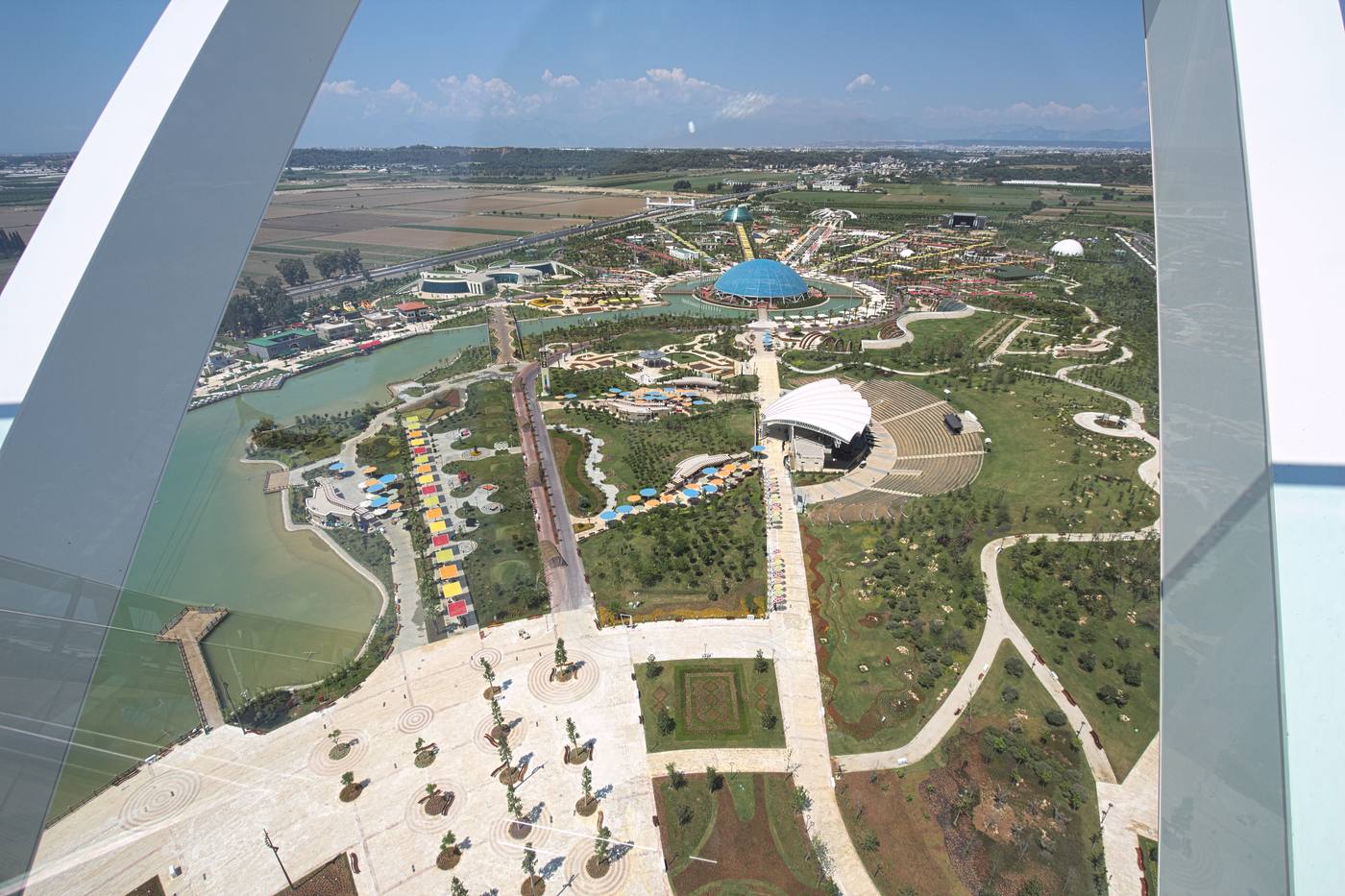
The 31st Conference of the Parties (COP31) will take place in Antalya, Türkiye, from 9 to 20 November, under a joint governance model in which Türkiye hosts the summit and presidency while Australia leads the formal negotiations. In preparation, SP Architects has spent the past year adapting the former EXPO 2016 grounds in Antalya’s Aksu district — originally built for an international horticultural exhibition — into the conference venue, combining renovations with new permanent and temporary structures.
The venue will comprise two zones with distinct functions: the Blue Zone, managed by the UNFCCC for formal negotiations, and the Green Zone for public events and exhibitions — coordinated on one site with shared circulation, security boundaries and facilities. The design uses modular and reusable building components, and the grounds are intended to keep hosting fairs, concerts and other events after the summit, in coordination with Antalya’s municipalities. The programme includes a dedicated day on resilient cities and the built environment on 12 November, covering climate-friendly buildings, urban resilience, disaster risk management and nature-based solutions.
02 / Albania accused of fast-tracking Trump-linked resort on Sazan Island
Source published:
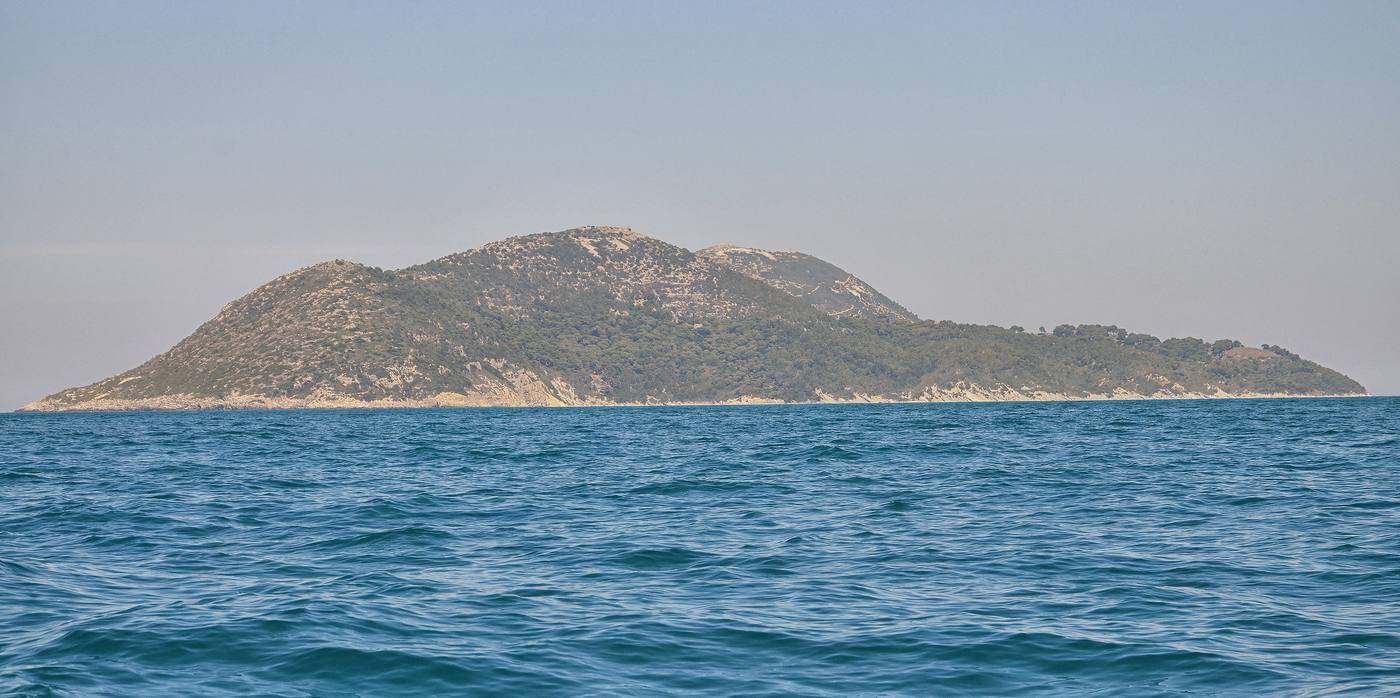

Albania’s prime minister Edi Rama has been accused of “sneaky and disloyal” practices to push through a luxury Trump-linked resort on the country’s Adriatic coast, amid fierce domestic protests. The accusation came from Dutch MEP Tineke Strik, who told The Guardian that Rama is avoiding EU environmental rules to build the resort — backed by Jared Kushner and Ivanka Trump — on ecologically sensitive sites including Sazan, Albania’s only island, and Vjosa-Narta, a wetland known for its flamingos.
The project would place thousands of luxury villas on protected landscapes. Albania’s government has passed a law allowing “strategic investors” to build in protected areas — a law the European Parliament pressed Tirana to repeal in June. Strik argues the government is finalising procedures before EU accession (expected around 2030) binds it to EU environmental standards. The controversy has fuelled the “Flamingo Revolution,” an environmental movement that began after groundworks commenced in June. No architect is officially attached to the project; LAVA previously developed a proposal for the peninsula site but is no longer involved, and BIG — once commissioned for a framework — has withdrawn.
03 / Design Museum Gent’s new wing rises in brick made from city waste
Source published:
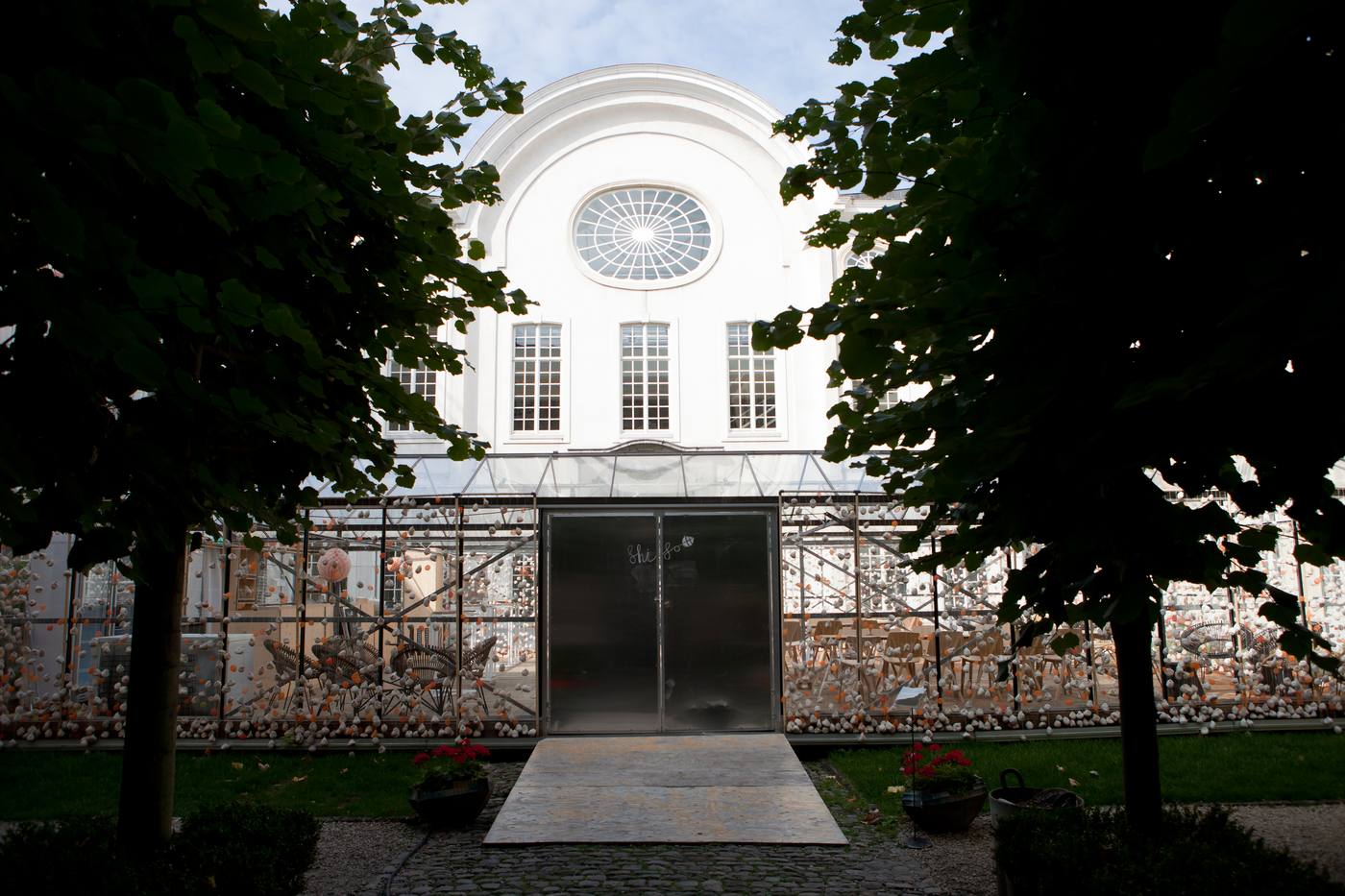

Design Museum Gent reopened on 3 October 2026 after a four-year renovation and expansion. Its new five-storey wing, designed by Carmody Groarke with Belgian practice ATAMA (competition winners in 2019), occupies the last vacant plot of the museum site in Ghent’s historic centre, adding 2,200 m² to buildings dating from the 16th to the 20th century. The wing’s façade is built from Gent Waste Brick: 63 per cent of its raw materials come from local waste streams — crushed concrete, waste glass from windows and car windscreens, and porcelain.
Instead of kiln firing, the bricks harden through a low-energy lime-curing process. More than 82,000 were produced locally at Het Arsenaal in Ghent, dimensioned to match the neighbouring Hotel De Coninck, with a light tone relating to the houses along Drabstraat. The architects combined the brick with timber in the new wing, which houses reception, a lecture space, workshops, temporary exhibitions and a fourth-floor event space.
04 / Studio ThusThat turns aluminium waste into delicate ceramics
Source published:
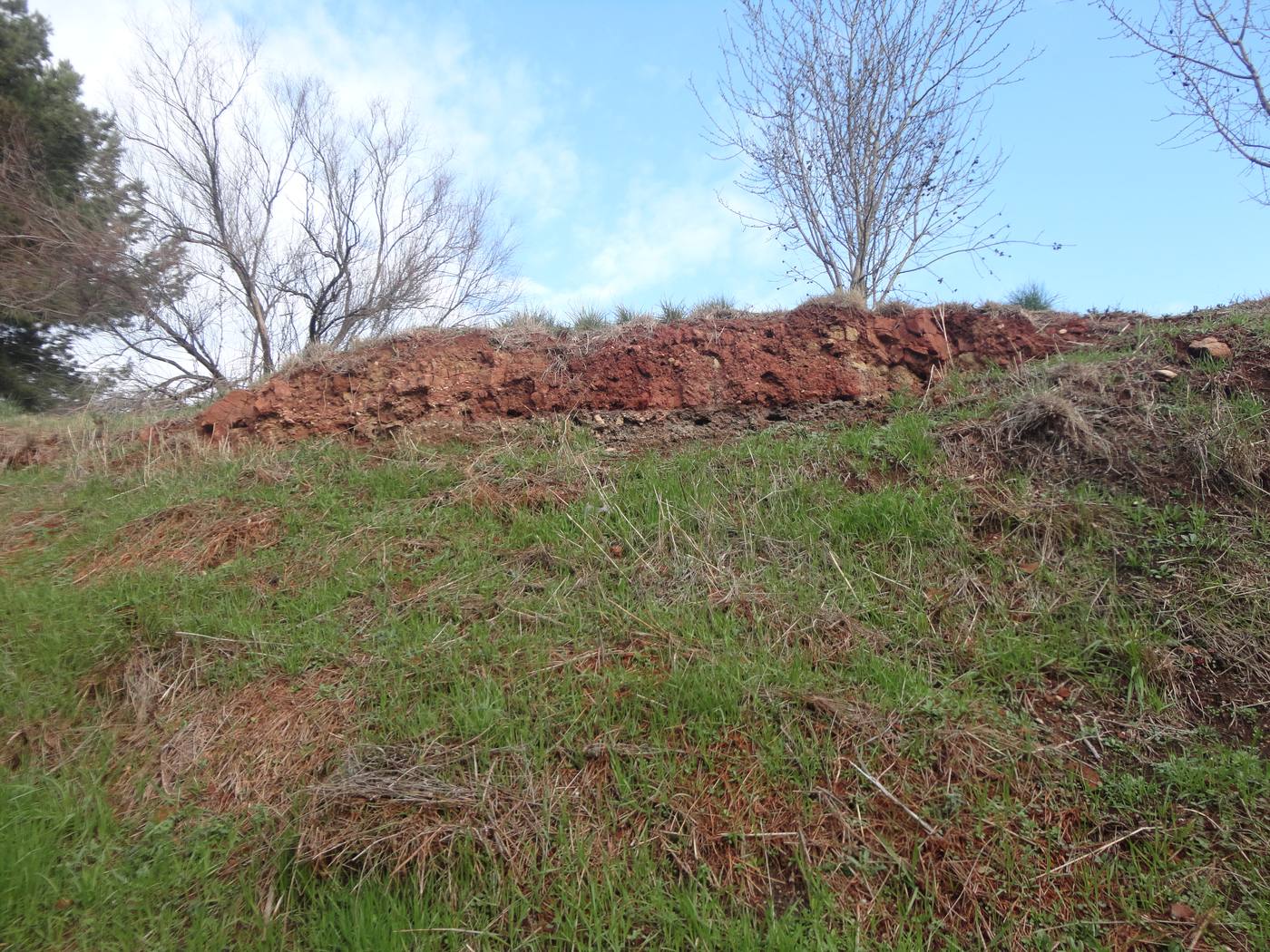

Amsterdam-based Studio ThusThat (Kevin Rouff and Paco Böckelmann) has spent years transforming red mud — bauxite residue, the alkaline waste left when alumina is extracted from bauxite ore — into finely formed ceramic vessels and experimental building materials. More than 150 million tonnes of red mud are generated globally each year, adding to stockpiles estimated at over four billion tonnes. The project began in 2019 at London’s Royal College of Art and grew through collaboration with materials scientists at KU Leuven, who helped adapt the residue’s iron-rich mineral composition for ceramic production, including slip casting — the mud is used in both the ceramic bodies and their glazes.
The research has extended toward architecture through a collaboration with London practice Tonkin Liu: modular ceramic tiles with shaped surfaces that can collect water or accommodate planting, with potential applications from roofing to coastal regeneration. The proposals remain experimental — manufacturing partners and larger-scale development are still needed — and the obstacles are real: processing costs, the distance between refineries and consumers, regulatory requirements, and the fact that only around three per cent of red mud was being repurposed when the research began.
05 / Prest Vale Architects extends a 17th-century Cotswolds rectory in local stone
Source published:
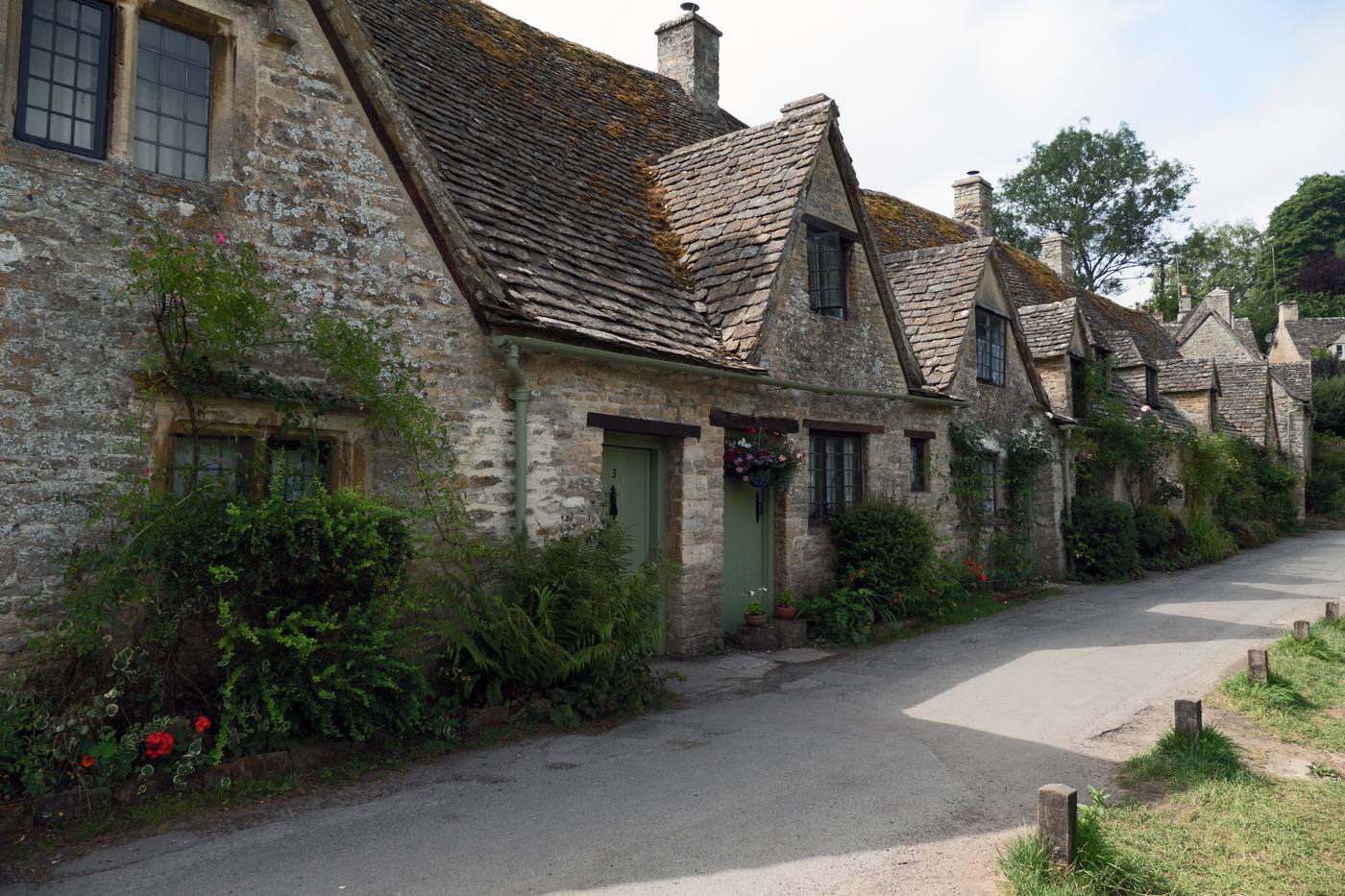

London studio Prest Vale Architects has extended a Grade II-listed rectory in the Cotswolds, near the Blenheim Estate in Oxfordshire, continuing its gabled roofline with a pale stone volume topped by a sundial. The 17th-century rectory stands beside a mid-18th-century stone barn; the architects extended the main home, converted the barn into a guest annexe beneath a new Douglas fir roof, and flattened a banked garden that had blocked daylight and views — a landscape scheme by Todd Longstaffe-Gowan introducing a ha-ha between garden and field.
The new work continues the existing formal language — the rectory’s southern façade was defined by three Cotswold stone gables — while marking itself as contemporary: local Cotswold stone for the walls, with fenestration and a gable end in crisp white Portland stone. “The existing silhouette has evolved over 300 years, so we wanted the extension to add to that evolution,” co-founder Michael Vale told Dezeen; co-founder Richard Prest described the aim as “a new gable that feels like a natural next chapter.”
Read source: Dezeen — Prest Vale Architects extends stone rectory in the Cotswolds, 22 October 2026
06 / Amman Design Week returns with “Accumulations”
Source published:
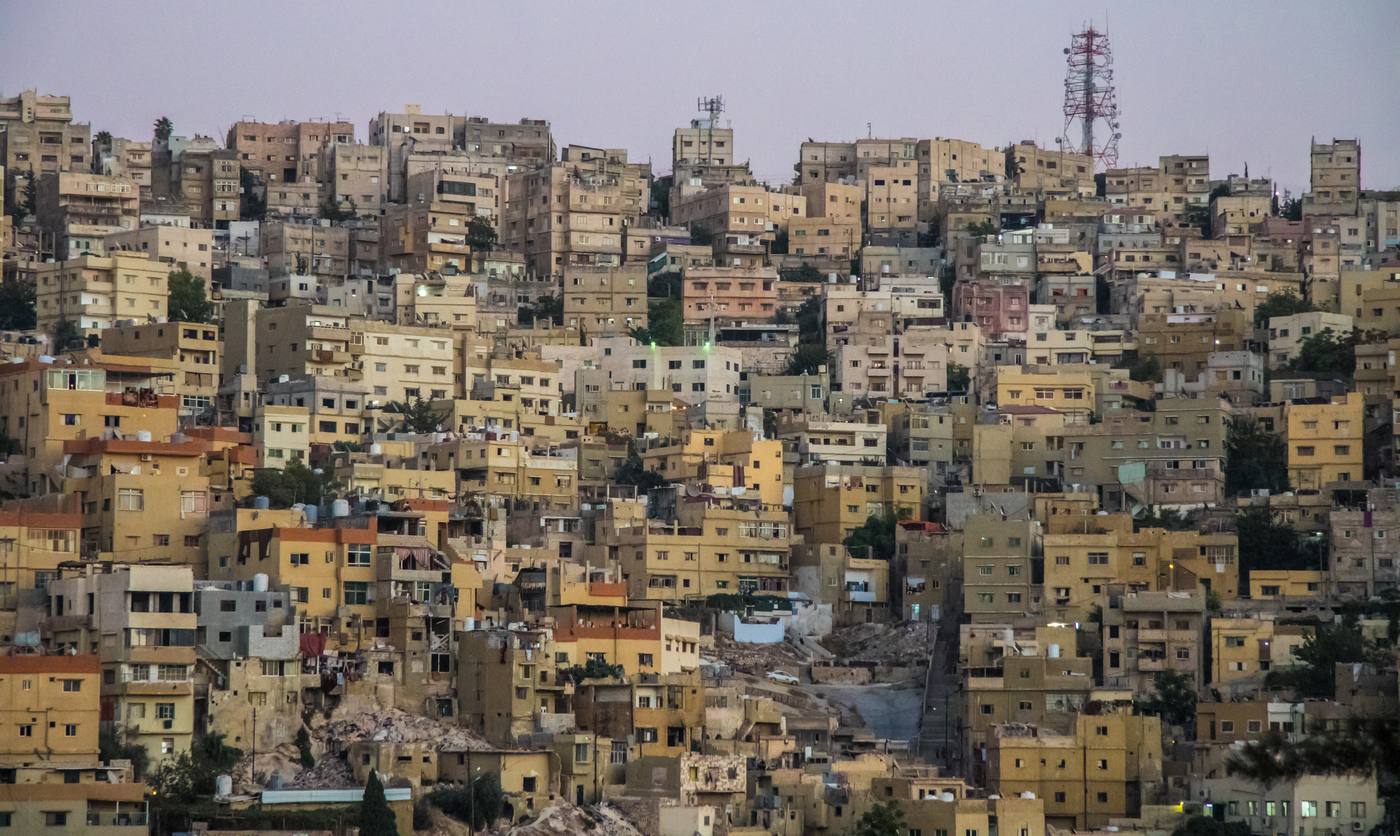

After a seven-year pause, Amman Design Week returned to Jordan (2–17 October) under the theme “Accumulations,” bringing together more than 220 designers, makers, architects and collectives across exhibitions, public interventions, talks and workshops. Founded by Queen Rania Al Abdullah in 2016, the event’s fourth edition was directed by architects Sarah Hejazin and Bisher Tabbaa of FADAA, with an exhibition programme curated by Faysal Tabbarah and a public programme by Khaled Al-Bashir.
The theme treated accumulation expansively — materials, knowledge, labour, memory, construction techniques and everyday rituals. Installations included Laith Matarweh’s “Al-Mastaba,” conceived as a future ruin that invites weathering and vegetation; DA+SA’s “Common Ground,” modular blocks for unscripted gathering; FADAA’s “A Brief Untaming,” which transformed a Paris Circle roundabout with earth berms from salvaged excavation soil; and L.E.FT’s “Ard Al Sahn,” a permanent stone-waste intervention oriented toward the Qibla that has already begun hosting Friday prayers. The main Hangar venue — a 1930s electricity-generator building rehabilitated by TURATH — embodied the theme itself.
The editor’s test: what architecture takes, and what it returns
These six items share a ledger. On one side: a summit staged on reused expo grounds, a museum faced in city waste, ceramics coaxed from mining residue, a rectory extended in local stone, a design week about keeping what the city has gathered. On the other: a resort that would trade a protected island and a flamingo wetland for luxury villas, fast-tracked past the environmental rules meant to stop exactly that.
Further reading
- Browse the previous briefing (22 October)
- Carbon budgets for buildings: how architects set a CO2 target and hit it
- What good dense housing looks like: 8 lessons from the 2026 Stirling Prize winner
- Read our guide to adaptive reuse and what to retain
- Low-carbon concrete and EPDs: the specifier’s guide
- Browse every dated architecture briefing
Source notes
Official announcements, source reporting and World Arch Journal commentary are distinguished. No sponsored placement is included in this edition.
- ArchDaily — COP31 to take place in Antalya, Türkiye, as SP Architects adapts former expo grounds, 22 October 2026
- Dezeen — Albania accused of fast-tracking controversial Trump-linked resort, 22 October 2026
- MaterialDistrict — Waste-based brick and timber shape new wing of Design Museum Gent, 22 October 2026
- designboom — Studio thusthat turns the rusty-red waste of aluminum production into delicate ceramics, 22 October 2026
- Dezeen — Prest Vale Architects extends stone rectory in the Cotswolds, 22 October 2026
- ArchDaily — What accumulates? Lessons on materiality, memory, and public space from Amman Design Week 2026, 21 October 2026
Found an error or rights concern? Contact the publisher.
📌 Never miss a story — add World Arch Journal as your preferred source on Google: https://www.google.com/preferences/source?q=worldarchjournal.com